Article 28 GDPR
Fill your data processing agreements automatically
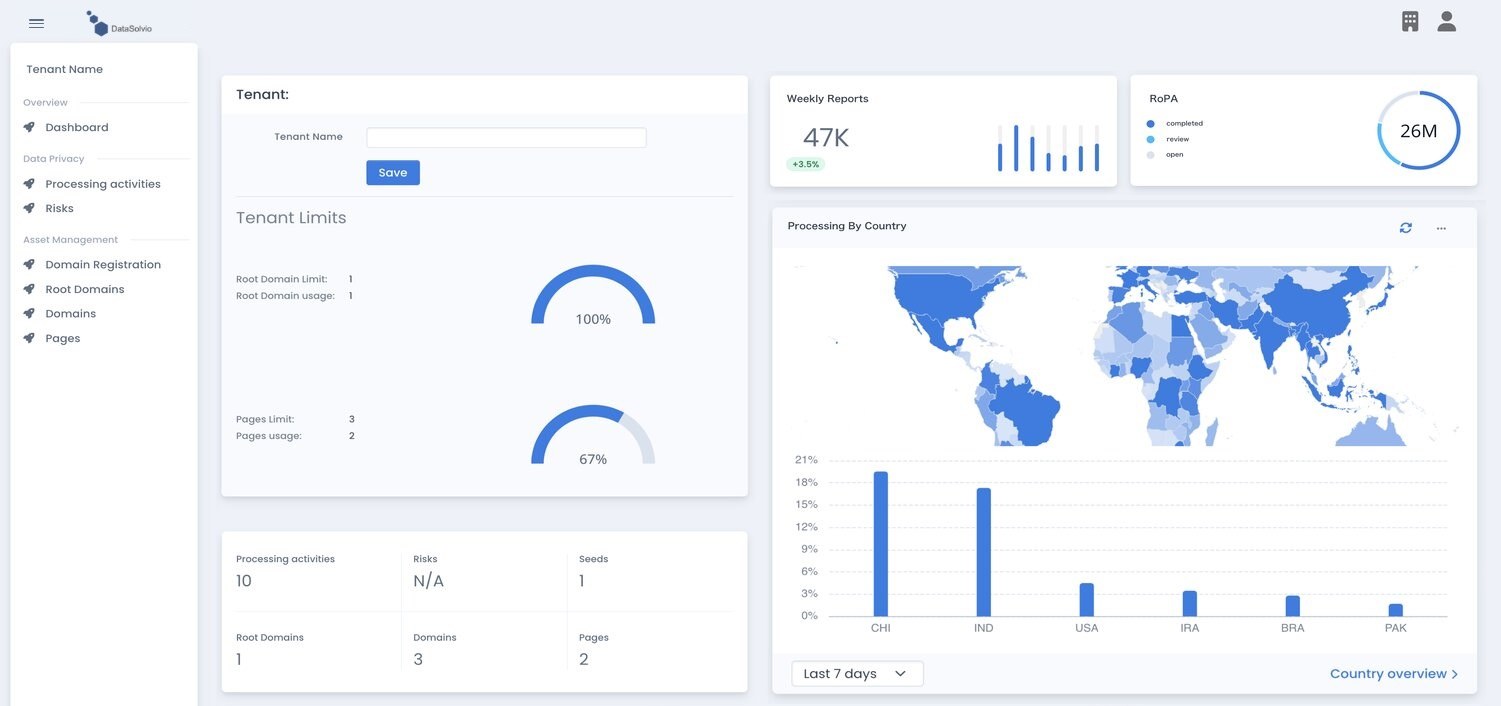
Signing a data processing agreement takes a minute. Compiling its annexes takes weeks: which service processes which data, for which purpose, in which country, with which subprocessors. DataSolvio derives all of that from your own websites.
Why the annexes are the hard part
Nobody wants to spend money or headcount on data protection. It still has to be done, and supervisory authorities have been issuing fines. The information required is not missing because it is secret - it is missing because it is scattered across marketing, IT and purchasing, and nobody keeps a central list.
Nobody knows all the services
Analytics, fonts, video, chat, captcha, tag manager. Every campaign adds a tool, and none of it is reported to data protection.
Nobody knows all the websites
Campaign pages, old subdomains, landing pages from an agency. They stay online, and they keep processing personal data.
It is outdated the day it is finished
A list compiled by hand describes the state of one afternoon. The websites change the following week.
What DataSolvio generates for your agreements
These are the annexes that every data processing agreement needs - and exactly the parts that are usually left empty or filled in with a placeholder.
Subject matter, nature and purpose of the processing
For each detected service: what it does, why it is embedded and what kind of data it sees. Derived from the technology actually in use, not from a questionnaire.
Categories of data subjects and of personal data
Website visitors, applicants, customers, newsletter recipients - together with the data categories that the respective service receives, such as IP address, device data or form contents.
List of processors and subprocessors
The contracting party as it belongs in the contract, including its registered seat. This is the annex that is most often missing entirely.
Transfers to third countries
Which services make a transfer outside the EU likely, so that you can decide about standard contractual clauses and a transfer impact assessment on a factual basis.
Basis for the technical and organisational measures
Detected transport encryption, cookie attributes and outdated components give you the factual basis for the measures annex and for your risk assessment.
A record of processing activities that stays current
Everything is re-scanned once a month. Changes are shown, so your agreements and your record do not quietly drift away from reality.
We generate the contents, not the contract wording
This distinction matters, so we state it plainly. The wording of your agreements belongs to you and your lawyers - it reflects your legal position and your negotiating history. What DataSolvio delivers is the factual substance those clauses refer to: which processor, which purpose, which data, which country, which subprocessor. That is the part that is genuinely laborious, and the only part a machine should be doing.
From your domain to the finished annex
You enter one domain
That is the whole setup. DataSolvio finds the rest of your digital footprint itself, including the subdomains nobody remembers.
We analyse and classify
Pages are retrieved, technologies recognised and assigned to a processor, a purpose and a legal assessment.
You get record and annexes
The record of processing activities under Article 30 is filled first. Its content carries straight over into the annexes of your agreements.
The same information for your internal agreements
An agreement with an external provider is only one of the places this information is needed.
- Joint controllership arrangements under Article 26 GDPR
- Intra-group agreements between your entities
- Internal policies and works agreements
- Compliance information for tenders and supplier audits
- Evidence towards a supervisory authority
It is compiled once and reused everywhere, instead of being researched again for every document.

Frequently asked questions
See where you stand in thirty seconds
The instant check reads one of your pages and shows you which processors are already on it. No registration required.

The offer represents technical support and not legal advice.
© krichenbauer.IT 2026